
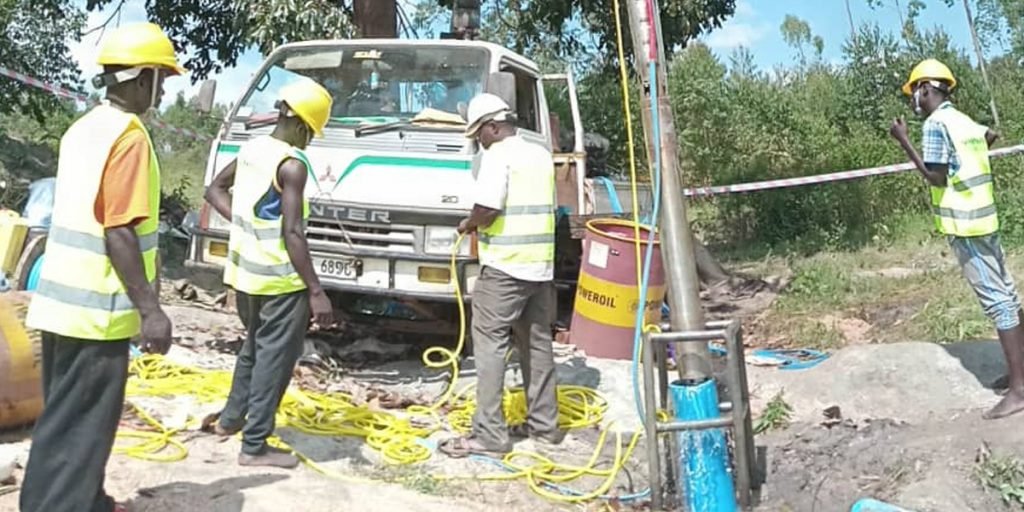
Different drilling methods are used for water wells depending on the geology and depth needed. Expert well technicians choose the best technique for your location and local rules.
Mud Drilling
This flexible and efficient method uses a mud rotary drill rig to pump drilling fluid through the borehole, especially where soils are softer, like clay, silt, or sand. The mud keeps the borehole stable, cools and lubricates the drill bit, and clears away debris. Mud rotary drilling is common in coastal areas with sandy or silty soil, in Uganda this type of drilling is mainly used in the rift valley region.
Rock Drilling
In hard rock layers, a hydraulically rotated drill bit attached to steel rods grinds into the rock, producing fragments. High-pressure air inside the drill rod pushes debris out between the rod and borehole wall. Air rotary drilling is widely used throughout Uganda.
Geothermal Drilling
Used mainly for geothermal energy projects, these wells can be very deep and need special tools and techniques. Because geothermal sites may be environmentally sensitive, drilling must be carefully planned and follow strict rules to lower impact. Green technology like geothermal systems cuts down fossil fuel use, reduces onsite combustion, and lowers power demand, which leads to fewer greenhouse gas emissions and less harm from nonrenewable resource extraction.